|
Late
Ice Panfish
by Ron Anlauf
The truly dedicated are about all that’s
left still
 working
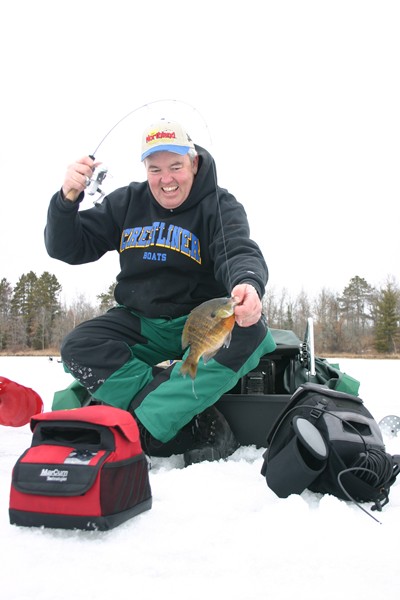
the late season ice, which is just fine with them. They’re
perfectly content having a bunch of biting panfish all to
themselves, and aren’t concerned that somebody else might be
missing out. More anglers could get in on the fun if only they
were willing enough to get back on the ice another time or two
and look in places where they haven’t looked before. working
the late season ice, which is just fine with them. They’re
perfectly content having a bunch of biting panfish all to
themselves, and aren’t concerned that somebody else might be
missing out. More anglers could get in on the fun if only they
were willing enough to get back on the ice another time or two
and look in places where they haven’t looked before.
Finding the “where” isn’t all that tough
and includes shallow water bays with old weed beds as well as
last year’s stands of reeds which can load up with slab
crappies. By late ice stretches of warm weather can peel away
layers of heavy winter snow and breath some life back into
shallow water and is when things start to change for the
better. Panfish respond by moving in and do so with an attitude
that keeps improving with every warming day after day. Sunnies
and crappies that had been holed up in deeper water or those
that stuck it out in the shallows but weren’t all that active
start to make some serious feeding movements which makes them
extremely vulnerable. Although they can be caught you still
better bring you’re A game if you plan on putting any of the
bigger fish on ice.
An “A” game includes light gear like two
and even one pound test line, tiny jigs down like #8 Northland
Doodle Bugs, and even the right live bait like Eurolarvae and
maggies. Eurolarvae instead of waxies or waxies instead of
Eurolarvae can make a real difference on any given day, and it
would be a good idea to have a little of everything with.
Plastic baits like Berkely’s Power Glowing Wigglers can also
produce and are a whole lot easier to take care of and a lot
less messy than bug babies. Even though crappies will usually
take a maggot you better have some minnows with, if that’s what
you’re specifically after.
Light action rods with soft tips and blanks
like Northland Tackle’s 24” ultra light model TSPC-24UL Gold
Series will help keep light line from breaking even under the
strain of a pound bluegill or a giant slab. They’ll also help
you give your bait a little action, and a little is about all
you will usually need. Any more might spook interested
onlookers, and any less might be ignored. The key is to
experiment with yourtechnique until you figure out what they
really want.
One of the most exciting late season
patterns is sight fishing, which includes fishing right below
the ice over shallower water where you can actually see the
bottom and see the fish. Reid Norrine of Oakdale, Minnesota is
an ice fishing machine that has spent a lot of time yanking big
slabs in gills out of shallow water and does a lot of it using
less than three feet of line: “It’s a great a late season
pattern, although it can produce all season long. I’ll look for
current areas where you can still find some green weeds and then
fish right over the top of them, and just under the ice. Even
if you don’t see fish right away don’t be afraid to work your
lure up high, right below the ice.
There are high riders that you won’t see
until they suddenly show up, just inches away from your bait.
Its fun when you can work a fish so close you could almost reach
down and touch it. Gills will come in and really eyeball a bait
before they take it and will give you an idea of what they do in
deeper water. Because you’re so close you’ll have to sit still
and use tiny motions when it comes to moving your lure or you’ll
spook the fish and they won’t bite. Crappies will usually grab
and go and it can all happen before you know it.”
To be able to see clearly you’ll have to
get under cover and is when a lighter portable like Eskimo’s
Pro-fish 150 comes in handy because it has enough room to be
comfortable but is easy enough to pick up and move, even if
you’re hoofing it.
Timing is definitely important and the hot
crappie action typically starts at daybreak and ends early in
the morning and then picks up again late in the day and can last
on into the dark. If angling pressure is a problem your best
bet is probably the early morning bite because most anglers
won’t be willing to make the sacrifice to get on the ice before
daybreak. Bluegills on the other hand seem to crank it up a
notch or two later in the day and can peak by late afternoon.
Late ice can actually be the best time of
the year to be out and when the action is most consistent.
The thing is you’ll never know how good it can be unless you
give it a try. See you on the ice, one more time.
Ron Anlauf |